General Microbiology · EDUCATIONAL DESIGN PREVIEW
Photosynthesis: steps, types & importance
Overview
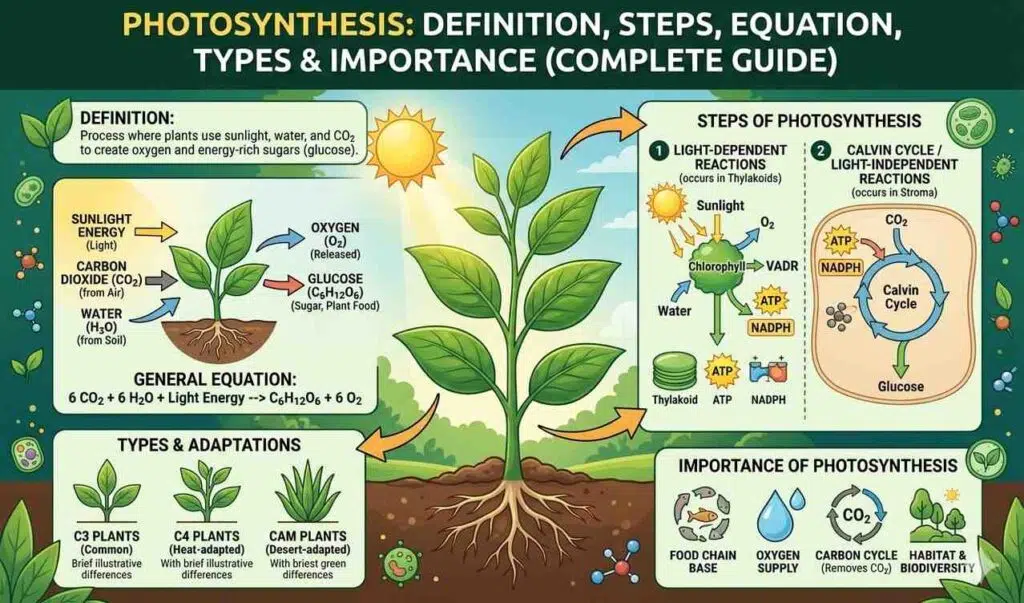
Photosynthesis converts light energy into chemical energy. In oxygenic photosynthesis, water supplies electrons and oxygen is released. Cyanobacteria carry out oxygenic photosynthesis, whereas many other photosynthetic bacteria use different electron donors.
Key principles
Light-dependent reactions generate ATP and reducing power. Carbon fixation then incorporates inorganic carbon into organic molecules. Anoxygenic photosynthesis does not release oxygen; its electron donors can include reduced sulfur compounds.
Further reading
Use authoritative references alongside your course material and current validated laboratory procedures.
Explore the reference source ↗Read the original website article ↗
Continue exploring
Antibiotic resistance: causes, mechanisms & prevention →
Bioplastics from algae and bacteria →
Serial dilution: a practical study guide →
Share this article on X ↗