Medical Microbiology · EDUCATIONAL DESIGN PREVIEW
Antibiotic resistance: causes, mechanisms & prevention
Overview
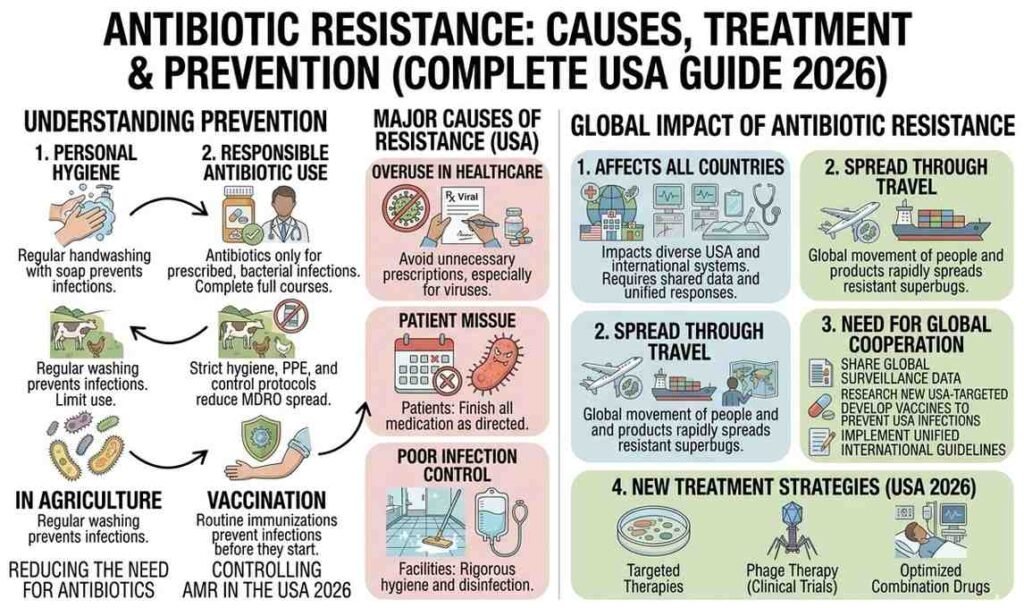
Antibiotic resistance occurs when bacteria acquire or develop mechanisms that reduce the effectiveness of an antibiotic. It is the microorganism, not the patient, that becomes resistant. Resistance may arise through mutations or the transfer of genetic material between bacteria.
Key principles
Important mechanisms include enzymatic drug inactivation, modification of the drug target, reduced permeability and active efflux. Susceptibility testing supports treatment decisions, but results must be interpreted in a clinical context. Prevention includes infection-control measures, vaccination where appropriate, and antibiotic stewardship.
Further reading
Use authoritative references alongside your course material and current validated laboratory procedures.
Explore the reference source ↗Read the original website article ↗
Continue exploring
Bioplastics from algae and bacteria →
Photosynthesis: steps, types & importance →
Serial dilution: a practical study guide →
Share this article on X ↗